Sued for Credit Card Debt in NY? Read This Before You Pay.
Facing a consumer debt lawsuit in New York? A lawyer reveals key defenses under the CCFA, like the 3-year statute of limitations. Learn how to dismiss your case.
Jay Browne, Brooklyn's Lawyer
11/11/20256 min read


How most people deal with owing consumer credit
My friend Egon walks into Boobie’s
where I’m sipping on a 16oz Vegan White Russian, glancing at M3F Fest's 2026 Lineup.
I go “You should come with me to Phoenix in March to see Artemas”
And he goes “My credit card is suing me for 6k.”
So I go “A) I told you that that was too much to spend on a first date. B) Why didn’t you tell me sooner? And C) I guess this means I’m buying drinks”
Egon replies with a huge eye roll.
I buy him a 16oz Rum Punch, and another. After he’s fully 32oz in I go “Seriously, your friends with a lawyer, why didn’t you talk to me about this?”
He goes “Jay, I was embarrassed. but also what could you do about it anyway? I'm just going to pay them what I owe them.”
Now it’s my turn to roll my eyes and then I say “A LOT! I could do a lot about it!”
Here's why Egon should have come to me and why anyone with any consumer debt should come to a lawyer before they just go pay it off.


MRW
Paying is Surrender, Not strategy
Egon’s instinct is to "just pay it." This is the single biggest mistake you can make when you're sued for a debt. It’s like walking into a courtroom and pleading guilty without ever looking at the evidence.
When a client like Egon (or you) walks into my office with a summons for a $6,000 debt, they think they have one option: pay. They're wrong. I see a whole checklist of possibilities.
Btw, if you just want to get a free consult to see what can be done about your consumer debt click here to go to the intake form page and then click consumer credit.
Here is what's running through my head—and what I told Egon.

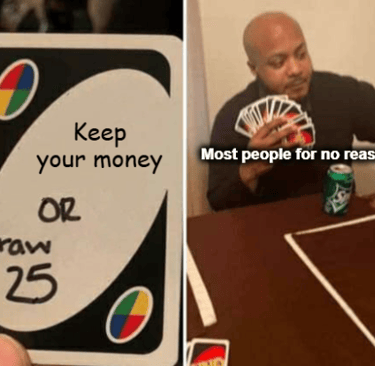
Why do people be like this?
1. The Clock: Is This Debt Legally "Dead"?
The first thing I’m checking is the date. In New York, we have a powerhouse law called the Consumer Credit Fairness Act (CCFA). This law changed everything. For most consumer credit debts, like a credit card, the statute of limitations is now only three years.
If Egon’s last payment was more than three years ago, the debt is "time-barred". That means they can’t legally win a lawsuit to collect it.
"But Jay," Egon said, "I think I made a $20 payment last year to get them to stop calling."
In many states, that's a fatal mistake that "restarts the clock". But this is New York. The CCFA specifically states that a payment made after the three-year limit has expired does not restart the statute of limitations.
A collector might trick you into paying, but they can't trick our state law. I can file a motion to dismiss the case, and poof—the $6,000 lawsuit is gone.


Let's bring this meme back
2. The "Prove It" Defense: Where's the Paperwork?
Okay, let's say the debt is new. My next move is to look at the lawsuit itself.
The CCFA requires the company suing you to attach a ton of proof with the complaint. They can't just say "Egon owes us $6k." They must include the name of the original creditor and, most importantly, a copy of the original contract or application he signed.
You would be shocked how many debt buyers (the companies that buy old debts for pennies) don't have this. They're hoping you'll be too scared or embarrassed to fight, so they'll get a default judgment.
If that paperwork is missing, I’m filing a motion to dismiss. Again, case over.
3. The "License" Defense: Are They Even Allowed to Ask?


This one is a beautiful, simple, NYC-only defense. In New York City, any agency trying to collect a debt from a city resident must be licensed by the Department of Consumer and Worker Protection (DCWP).
Is the company "Brooklyn Debt Buyers LLC" suing Egon? The very first thing I'm doing is checking the DCWP database. If they're not on that list, they are collecting illegally. That's a complete defense in court.
4. The Real-Life Nightmare: What Happens if You Ignore It
This is what I really had to get through to Egon. His "plan" to just pay them was already falling apart, and his next logical step was to get overwhelmed and just... do nothing. Doing nothing is the only thing worse than "just paying."
If you don't answer a lawsuit, the collector wins a default judgment. This is a court order that gives them scary new powers. They can garnish your wages, taking money straight from your paycheck. They can freeze your bank account.
And here is the part that made Egon drop his rum punch: In New York, a creditor with a judgment can freeze up to double the amount of the judgment in your bank account. That’s not a typo. They do it to cover interest and their own attorney’s fees. Egon's $6,000 debt could become a $7,000 judgment (with fees), which means he could wake up to find $14,000 frozen in his checking account.
Now, there is one critical protection here, and it’s the part collectors never tell you about. New York's "Exempt Income Protection Act" automatically shields certain funds from being frozen, even with a judgment. We're talking about money that's electronically deposited from sources like Social Security, SSI, disability, public assistance, or veterans' benefits. The law forces the bank to leave a protected "floor" amount of that money alone.
But here’s the trap Egon would fall into: Is his "rent money" from a regular paycheck? If so, it's fair game and can be frozen. And even if his money is legally exempt, he'd still wake up to a frozen account and have to be the one to file claim forms to get it back. Do you want to be the one fighting with a bank to unfreeze your account just to buy food? That’s his rent, his food, his everything tied up in a legal mess.
THAT is the true cost of "just paying" or "just ignoring" a debt.


these jerks owed YOU money?
5. How the Turn Tables
This is the last part, and it's my favorite. Sometimes, the client who's being sued is actually the victim.
I asked Egon, "Are they harassing you? Calling you at all hours? Threatening you? Using profane language?"
Because if they are, they are violating a powerful federal law called the Fair Debt Collection Practices Act (FDCPA). And the FDCPA gives you the right to sue them.
Here's your favorite part: If you win, the law says the debt collector has to pay your attorney’s fees.
This is the ultimate answer to "what could you do about it?" I could get the case against you dismissed and get you a check.
So before you pay your credit card company a bunch of money that you don’t need to go to my intake form page and fill out the consumer credit form for your free consult call or email my us with any questions at contact@attorneyjaybrowne.com
Contact us (347) 669-3256
contact@attorneyjaybrowne.com
© 2024. All rights reserved.